
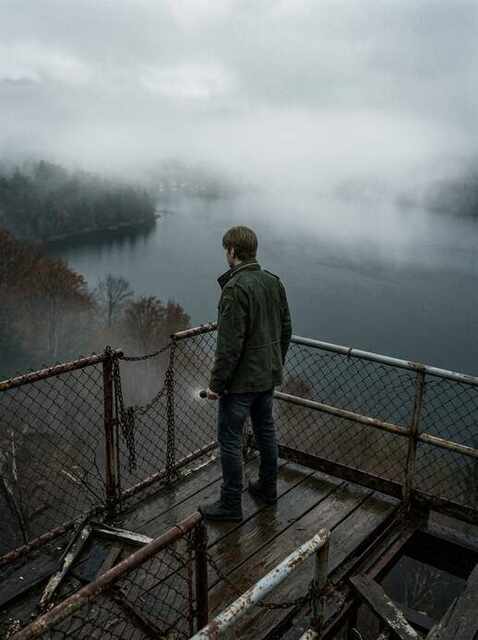
In 99% of video games, a clear boundary separates the Musical Score (composed by a musician) from the Sound Effects (created by a foley artist). In Silent Hill 2, composer and sound director Akira Yamaoka erased that boundary completely.
By serving as both the composer and the lead sound designer, Yamaoka engineered an acoustic landscape where you frequently cannot tell whether a scraping metallic groan in Brookhaven Hospital is a track on the soundtrack, an ambient boiler pipe in the basement, or Pyramid Head dragging his Great Knife down the corridor behind you.
Title: Akira Yamaoka’s 3 Acoustic Rules of Psychological Horror
Badge: Sound Architecture
- 1. Industrial Foley as Rhythm: Instead of traditional orchestral horror strings, combat and exploration tracks are built from distorted drill presses, scraping sheet metal, detuned dental drills, and muffled bass heartbeats.
- 2. Melancholic Trip-Hop Contrast: Outside of monster encounters, tracks like "Theme of Laura," "Promise (Reprise)," and "White Noiz" blend Portishead-inspired trip-hop breakbeats and warm melancholic guitar chords—reminding the player that Silent Hill 2 is ultimately a tragedy about grief and guilt.
- 3. Weaponized Silence: Yamaoka famously stated that silence is not the absence of sound—it is an active musical rest that forces the player to hear their own breathing and footsteps.
Why Unpredictable Sound Loops Prevent "Horror Habituation"
When a horror game plays a predictable 4-bar orchestral combat loop every time an enemy spots you, your brain rapidly habituates to the cue: "Music started = monster nearby; music stopped = room is 100% safe." Once that binary rule is learned, all tension evaporates the moment the combat music fades out.
In Silent Hill 2 (and our Silent Hill 2 Survival Walkthrough), Yamaoka deliberately decouples acoustic tension from actual monster presence:
- Sometimes you open a door into a completely empty bathroom and a deafening industrial metallic thud echoes for twenty seconds while nothing attacks you.
- Other times, James's pocket radio emits a faint, irregular static crackle while the background drone cuts out completely—leaving you to creep past a motionless Mannequin hidden in the corner shadow.
That acoustic uncertainty is why Silent Hill 2 lingers in your subconscious long after you turn off the screen.