
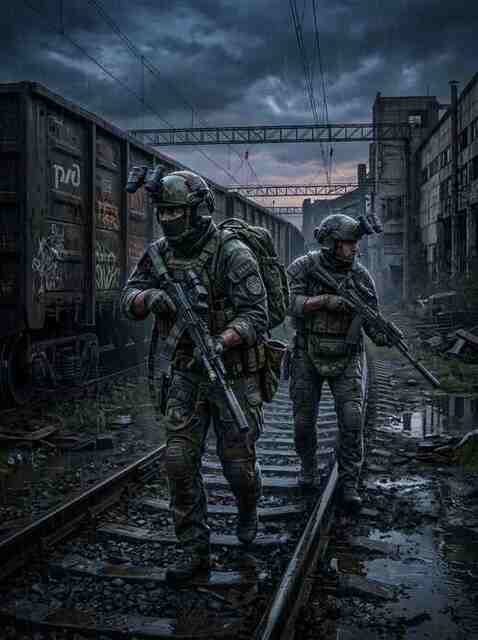
In a standard Call of Duty, Battlefield, or Battle Royale match, every player enters the lobby with a clean slate. If you lose a gunfight in a Battle Royale, you lose the fifteen minutes you spent looting that specific match, click "Play Again," and drop out of the plane with zero permanent damage to your account.
In an extraction shooter like Escape from Tarkov, Hunt: Showdown, or hardcore survival sandboxes like Rust, the stakes are fundamentally inverted: to enter the raid, you must wager the weapons, armor, night-vision goggles, and ammunition you spent previous hours earning. If a stray bullet catches you thirty meters from the extraction flare, everything in your backpack and hands belongs to someone else.
That single mechanical twist produces a phenomenon every extraction player knows intimately: Gear Fear—the irrational compulsion to leave a prized, fully modded Tier-6 armor kit and thermal M4A1 sitting safely in your stash for an entire six-month wipe while deploying with a rusty budget shotgun.
Title: The Behavioral Economics Behind Extraction Tension
Badge: Game Psychology
- Kahneman & Tversky's Loss Aversion Ratio (`~2.25x`): In human behavioral economics, the psychological pain of losing an item you already own is roughly 2.25 times stronger than the dopamine pleasure of winning an item of equal value.
- The Endowment Effect: Once a player spends 15 minutes in the gunsmith menu assembling a custom rifle from 14 individual parts, their brain assigns higher subjective value to that specific gun than its raw rouble price on the Flea Market.
- Asymmetric ObjectiveVictory Conditions: Unlike Battle Royales where 97 out of 100 players "lose," in an extraction shooter you define what a win looks like—slipping out a side sewer with a single quest pocket watch can feel like winning the Super Bowl.
Why Extraction Shooters Create Unscripted Stealth Drama
Because every player in an extraction map has a different risk profile and a different extraction clock, encounters are infinitely more unpredictable than symmetric arena shooters:
- A solo player wearing cheap pacas who just found a rare LEDX skin transilluminator will crawl through bushes for twelve minutes avoiding every gunshot like a survival horror protagonist.
- A three-man squad in heavy Altyn helmets hunting boss spawns will kick down dormitory doors with flashbangs.
How to Cure "Gear Fear" and Actually Use Your Best Loadouts
Veteran extraction players overcome Gear Fear by reframing a simple economic truth: you never truly own any item in your stash—it is just your turn to borrow it. Good armor and high-penetration ammo actively increase your survival probability from 35% to 65%, meaning hoarding a 500,000-rouble kit in your inventory until the seasonal server wipe deletes it has a 100% loss rate, whereas bringing it into a raid pays dividends in won gunfights.