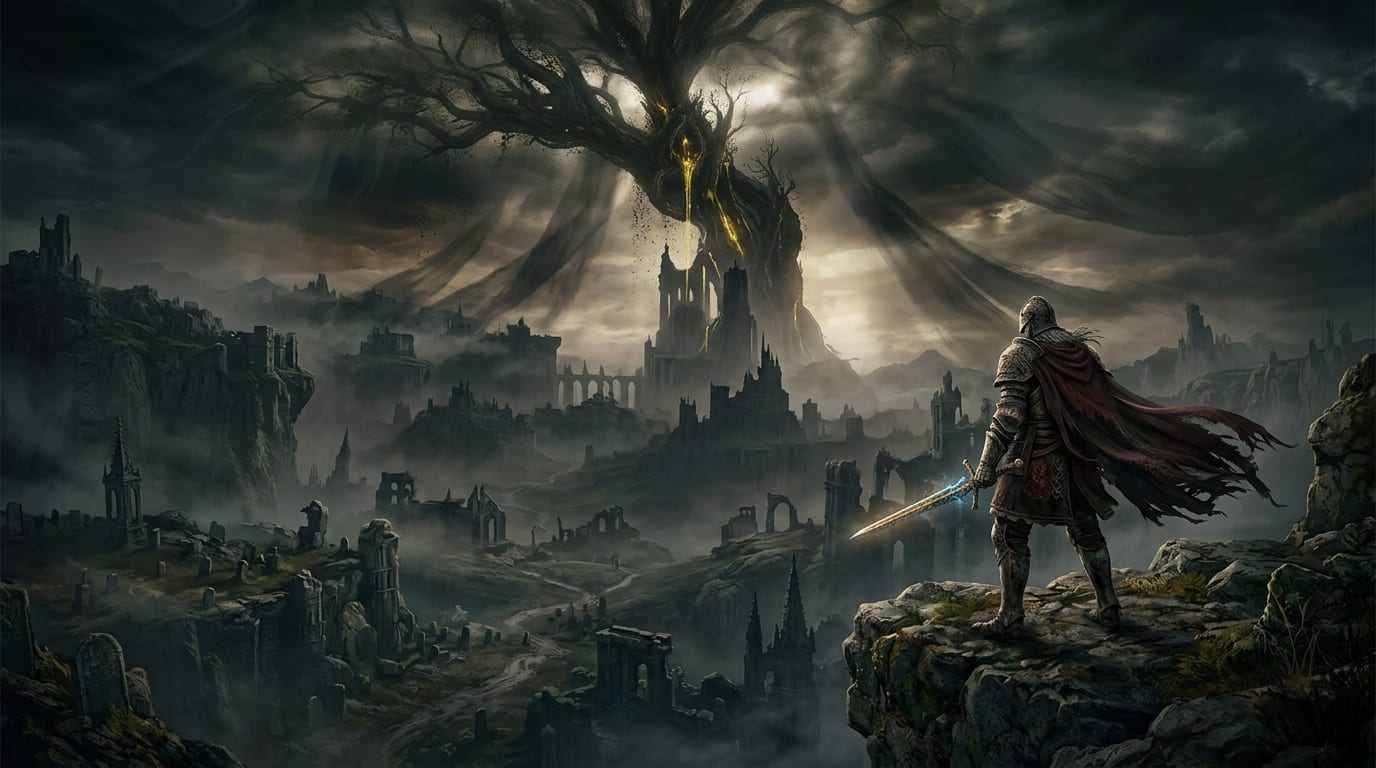
Comprehensive Review & Analysis
Shadow of the Erdtree represents FromSoftware operating at the absolute zenith of their architectural, atmospheric, and mechanical capabilities. Rather than offering a standard collection of isolated dungeons, director Hidetaka Miyazaki delivered a fully realized, vertically stacked continent that bends exploratory geography back upon itself in staggering ways. The Land of Shadow is denser and far more labyrinthine than the base Lands Between, with subterranean ravines, hidden finger ruins, and volcanic crags interconnected through discreet cliffside pathways and ancient stone coffins.
Combat in the expansion is intentionally calibrated for battle-hardened Tarnished. The new Scadutree Fragment and Revered Spirit Ash progression curves solve the universal RPG dilemma of endgame stat bloat: incoming damage from standard knights and grotesque omen creatures remains lethal unless players actively scour the map for blessings. This elevates exploration from a completionist checkbox into an urgent survival necessity. Furthermore, the introduction of eight distinct weapon categories — such as martial arts hand-to-hand combat, throwing weapons, and the rhythmically fluid Light Greatswords — injects fresh dynamism into the Souls combat sandbox.
Boss encounters in the expansion are among the most visually breathtaking and punishing FromSoftware has ever conceived. Confrontations against Messmer the Impaler, Midra Lord of Frenzied Flame, and the dancing divine beasts feature multi-phase transitions backed by sweeping choral compositions. While certain late-game visual effects can push screen readability and hardware frame rates during climactic alpha-heavy spells, Shadow of the Erdtree stands as an indisputable masterpiece that sets a benchmark for what game expansions can achieve.