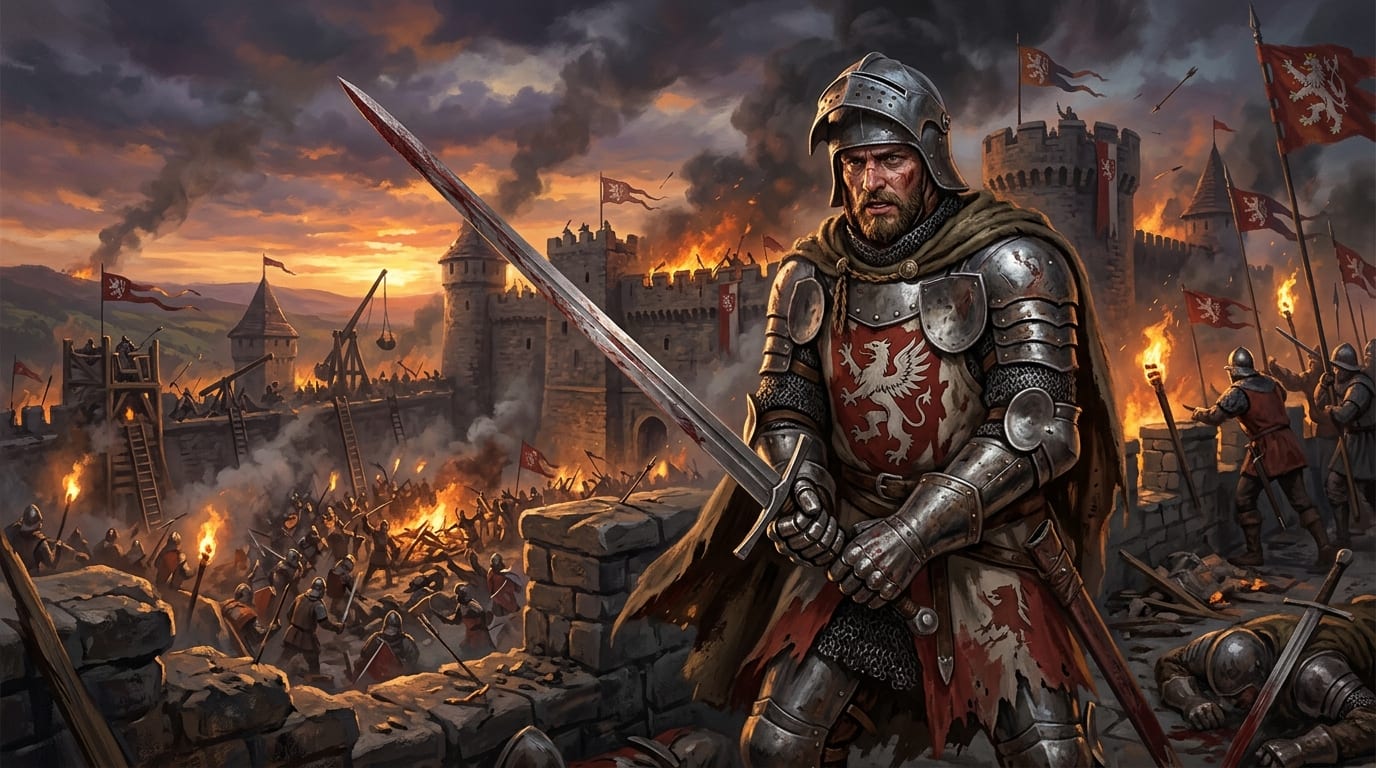
1. Deconstructing the 4-Point Directional Stance System
Warhorse Studios streamlined Kingdom Come II’s combat from the original five angles to four distinct directions: Top, Left, Right, and Center Thrust. Your weapon position dictates both your offensive angle and defensive guard. When Henry raises his longsword into high vom Tag (top guard), he naturally defends against overhead cleaves, but leaves his lower flanks exposed. Shifting stances takes physical animation frames; skilled swordsmen constantly transition guards to bait opponents into committing to vulnerable angles.
2. The Anatomy of the Perfect Block & Master Strike
The green shield indicator in the center of the reticle signals the precise parry window. Tapping block immediately as the enemy initiates their forward swing executes a Perfect Block, preserving all stamina. If you time the block during the first 150ms of the enemy’s windup while matching your weapon angle to their attack vector, Henry performs a Master Strike—an unblockable defensive deflection that delivers an instantaneous counter-wound directly to the opponent’s unprotected throat, skull, or forearm.
3. Feinting & Guard Manipulation
To crack heavily armored opponents in plate armor, hold down the attack button in one direction (e.g., high vertical cut), wait for the enemy to raise their guard to meet it, then quickly flick the directional input to the lower left or right and release. Henry transitions the blade trajectory mid-strike, striking the adversary’s exposed ribcage or knee before their defensive stance can recover.
4. Armor Penetration Math: Slashing vs Piercing vs Blunt
Damage in Kingdom Come II is dictated by physical material interaction. Slashing longswords deal catastrophic damage against unarmored bandits wearing cloth or leather, but slide harmlessly off forged steel cuirasses. When confronting armored Hungarian mercenaries or robber barons, equip a heavy warhammer, mace, or polearm. Blunt weapons bypass plate armor entirely, transferring kinetic energy directly through steel to concuss the brain and break collarbones.
5. Clinch Breaking & Horseback Lance Charges
When an opponent closes distance, Henry enters a physical clinch. Winning the clinch is determined by Henry’s Strength stat and the timing of your kick or hilt-push input. Successfully winning a clinch pushes the opponent backward into stumbling stagger frames, granting an uncontested window for a guaranteed face-stab. On horseback, couching a lance at full gallop delivers one-hit kills on even the most heavily armored enemy knights.