
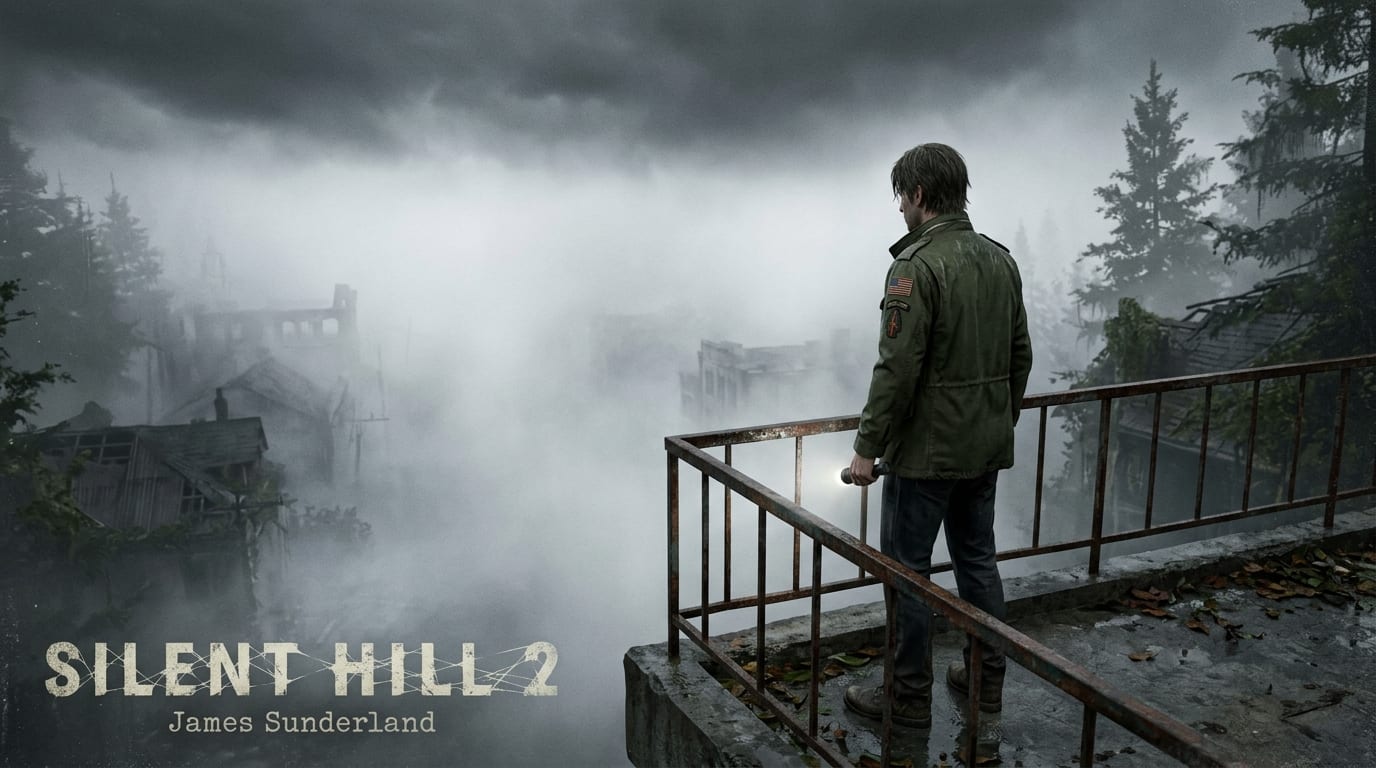
Why do millions of human beings eagerly pay money to sit alone in a dark room and subject themselves to terror, heart palpitations, and psychological distress?
In 2026, horror is no longer a niche, seasonal curiosity reserved for October Halloween promotions. It is one of the most commercially resilient, culturally dominant, and technologically groundbreaking genres in the global video game industry. From blockbuster remakes of Resident Evil and Silent Hill 2 to breakout multiplayer phenomena like Lethal Company and Phasmophobia, interactive terror commands billions of hours of player engagement and livestream viewership.
To understand why horror gaming is surging at an unprecedented velocity, we must dissect the intersection of human evolutionary psychology, next-generation sensory technology, streaming media dynamics, and the unique psychological contract between a player and their controller.
---
1. The Psychology of "Controlled Fear"
At the core of the horror gaming explosion lies a fascinating human contradiction known in cognitive psychology as recreational terror.
When you experience a sudden shadow or an unearthly shriek in a horror game, your body undergoes the exact same physiological emergency cascade as it would if you met an apex predator in the wild:
- Your sympathetic nervous system fires instantly, flooding your bloodstream with adrenaline, cortisol, and noradrenaline.
- Heart rate spikes, pupils dilate to gather ambient light, and blood diverts from your digestive tract to your skeletal muscles.
- Your prefrontal cortex—the logical seat of cognition—swiftly assesses the physical reality: you are seated comfortably on a couch or gaming chair, holding a piece of plastic or composite circuitry, with zero genuine threat to your bodily integrity.
This cognitive disconnect transforms raw panic into intense euphoria. As the immediate perceived danger passes without physical consequence, your brain's reward pathway releases an intoxicating rush of dopamine and endorphins. You experience an authentic biological survival victory with absolute zero physical risk.
Title: The Recreational Fear Paradox
Badge: Cognitive Insight
- Evolutionary Rehearsal: Humans are hardwired to simulate threats. Interactive horror acts as safe evolutionary training, allowing our brains to practice danger assessment, panic management, and problem-solving under sensory overload.
- Dopaminergic Catharsis: Navigating a terrifying corridor and reaching a brightly lit save room triggers a biological wave of relief that passive media can never reproduce.
- Safe Vulnerability: In a modern world saturated with chronic low-grade anxiety, acute simulated terror provides a structured beginning, middle, and end, offering genuine emotional closure.
---
2. Interactive Agency: Why Games Dwarf Horror Cinema
Cinema and literature have terrified audiences for centuries, but video games possess a singular weapon that passive media lacks: direct agency.
In a horror film, when a character walks down a pitch-black basement stairway, the viewer can cover their eyes, look away, or passively wait for the director's edit. The film will proceed regardless of your courage.
In a horror game, the story does not move unless you do.
If you freeze in terror inside a decaying medical ward in Dead Space or Alien: Isolation, the game freezes with you. To progress, you must consciously push forward on the analog stick or depress the W key. You are forced to actively author your own endangerment.
This inversion of responsibility dramatically amplifies dread. Every death or failure is not an unfortunate tragedy befalling an onscreen actor—it is your personal tactical failure.
Title: Immersion & Heart Rate Elevation Across Entertainment Formats
Badge: Physiological Arousal Index
Traditional Horror Novel: 18% | 18 | indigo | Passive cognitive visualization
Horror Feature Film (Cinema): 44% | 44 | amber | Visual & auditory stimulation without agency
Non-Interactive VR Cinema: 62% | 62 | purple | Spatial presence with passive timeline
First-Person Survival Horror Game: 92% | 92 | rose | Active tactile agency, resource survival, & consequence
Note: Normalized physiological index based on continuous ECG heart-rate variance and galvanic skin response during critical encounter sequences.
---
3. The Evolution of Horror: Beyond the Cheap Jump Scare
Early horror games frequently relied on abrupt auditory spikes and sudden monsters bursting through glass—the classic jump scare. While startling, jump scares suffer from rapid diminishing returns and induce emotional exhaustion rather than authentic fear.
Modern horror design has shifted radically toward ambient dread and psychological vulnerability.
Instead of attacking the player constantly, visionary titles withhold threats for agonizing durations. Designers manipulate the dread of anticipation:
- Unpredictable Audio Cues: Distant metal clangs, dragging chains, or muffled weeping behind locked doors that never materialize into immediate combat.
- Resource Scarcity: Handing the player a shotgun with exactly two shells and four enemies in the corridor, transforming an action encounter into a suffocating mathematical dilemma.
- Environmental Uncanny: Designing architecture that shifts subtly when the camera turns away, destroying the player's spatial trust and psychological grounding.
| Pillar | Survival Horror (e.g. Resident Evil, Dead Space) | Psychological Horror (e.g. Silent Hill, Signalis, Alan Wake) |
|---|---|---|
| Player Objective | Resource management, spatial routing, survival | Unraveling guilt, existential dread, uncovering reality |
| Primary Threat | Physical monstrosities, bio-weapons, resource depletion | Hallucinations, warped memories, unreliable perception |
| Combat Role | Tactical rationing of ammunition and inventory slots | Avoidance, defensive running, disorienting puzzles |
| Spatial Environment | Abandoned laboratories, gothic mansions, derelict ships | Shifting fog, dreamscapes, distorted personal domestic spaces |
| Emotional Climax | Empowerment through resource optimization and boss defeat | Ambiguous revelation, melancholy catharsis, psychological release |
---
4. Technological Catalysts: Spatial Audio and Lighting
The meteoric rise of horror gaming in recent years is inextricably tied to leaps in real-time audiovisual rendering.
Binaural 3D Spatial Audio
Sound accounts for over 60% of fear in interactive media. With modern hardware-accelerated binaural audio engines (such as Sony Tempest 3D, Dolby Atmos, and Steam Audio), sound designers simulate the exact acoustic properties of physical rooms:
- Ray-traced sound waves calculate real-time echoes, reflections, and wall occlusions.
- When a creature skitters across the ceiling pipes behind your left shoulder, your ears detect the fractional microsecond delay between your left and right earlobes.
- Hearing a heavy footstep directly behind you when your flashlight batteries are dying creates a visceral, neck-hair-raising panic that flat stereo audio simply could not generate.
Photorealistic Shadowing and Ray-Traced Illumination
In the past, video game darkness was merely a gray texture applied over polygonal walls. With modern path tracing and volumetric fog, darkness is a dynamic, living void. Flashlights cast accurate bounce lighting that catches microscopic dust particles, leaves deep, terrifying silhouettes, and conceals grotesque details until you are mere inches away.
---
5. The Streaming and Content Creator Multiplier
No discussion of horror's ascent is complete without acknowledging YouTube, Twitch, and TikTok.
Horror games are the ultimate spectator sport. Watching a streamer react to terrifying encounters creates a dual layer of entertainment: the viewer experiences the game's tension while enjoying the comedic relief of the creator's genuine panic.
Games like Amnesia: The Dark Descent originally catalyzed the modern Let's Play boom in the early 2010s. Today, algorithmic discovery engines can turn an obscure indie horror project into a global cultural phenomenon overnight:
- Five Nights at Freddy's demonstrated how simple, high-stakes surveillance mechanics and rich hidden lore could spawn a multi-million-dollar franchise and Hollywood films.
- Lethal Company, created largely by a solo developer, shattered Steam concurrent player records through its brilliant blend of claustrophobic sci-fi scavenging, proximity voice chat, and emergent horror comedy.
- Phasmophobia turned paranormal ghost-hunting into a cooperative tactical experience where the game literally listens to your real microphone to locate your hiding spot.
Title: The 4 Stages of Interactive Horror Mastery
Badge: Player Progression
- 1. Acute Sensory Panic: New players react with erratic camera movements, wasted ammunition, and paralysis when encounters trigger.
- 2. Environmental Pattern Recognition: Learning enemy auditory signatures, patrol cadences, and room layout exits.
- 3. Ruthless Resource Economization: Transitioning from fear to clinical efficiency—counting bullets, baiting enemy attacks, and managing stamina.
- 4. Strategic Dominance and Catharsis: Navigating previously terrifying sectors with confident tactical rhythm, achieving complete psychological mastery over the simulated nightmare.
---
6. The Indie Revolution vs AAA Renaissance
The horror ecosystem enjoys a unique structural advantage: it thrives at every budgetary tier.
While AAA budgets have ballooned past $200 million, leading mainstream publishers to produce risk-averse open-world checklists, horror remains a genre where innovative ideas outperform sheer financial scale.
Indie creators have spearheaded experimental sub-genres:
- Low-poly PS1-era retro horror (e.g. Signalis, Crow Country, Iron Lung) uses intentional visual abstraction to let the player's imagination fill in horrific details.
- Analog horror and "liminal space" games exploit nostalgia, VHS static, and abandoned fluorescent office mazes to induce profound unease.
- Short-form narrative vignettes (such as the works of Chilla's Art) explore real-world urban isolation, late-night convenience stores, and stalking.
Simultaneously, AAA studios have realized that uncompromised survival horror remakes—such as Capcom's breathtaking reimaginings of Resident Evil 2 and 4—can achieve both universal critical acclaim and massive commercial profit.
---
7. The Community Connection: Surviving Together
Finally, horror has evolved from an isolating solo ordeal into a thriving community bonding experience.
Whether dissecting cryptic lore clues on the Game Vault Community Forum, sharing speedrun routing tactics, or coordinating tense scrap-retrieval runs over Discord, surviving horror forms authentic social camaraderie. When people face shared danger—even simulated danger—social bonds solidify rapidly.
Horror games prove that modern players do not merely seek escapist power fantasies. We crave authentic emotional vulnerability. We play horror because, in an increasingly predictable and sanitized modern landscape, facing the dark with a controller in hand reminds us that fear can be confronted, understood, and ultimately overcome.
---
Ready to test your gaming rig's readiness for the latest path-traced horror titles? Check out our PC Game Requirements Checker or design an optimized battle station with our Gaming PC Builder. Join fellow operatives on the Game Vault Forum to share your most terrifying gaming memories.