
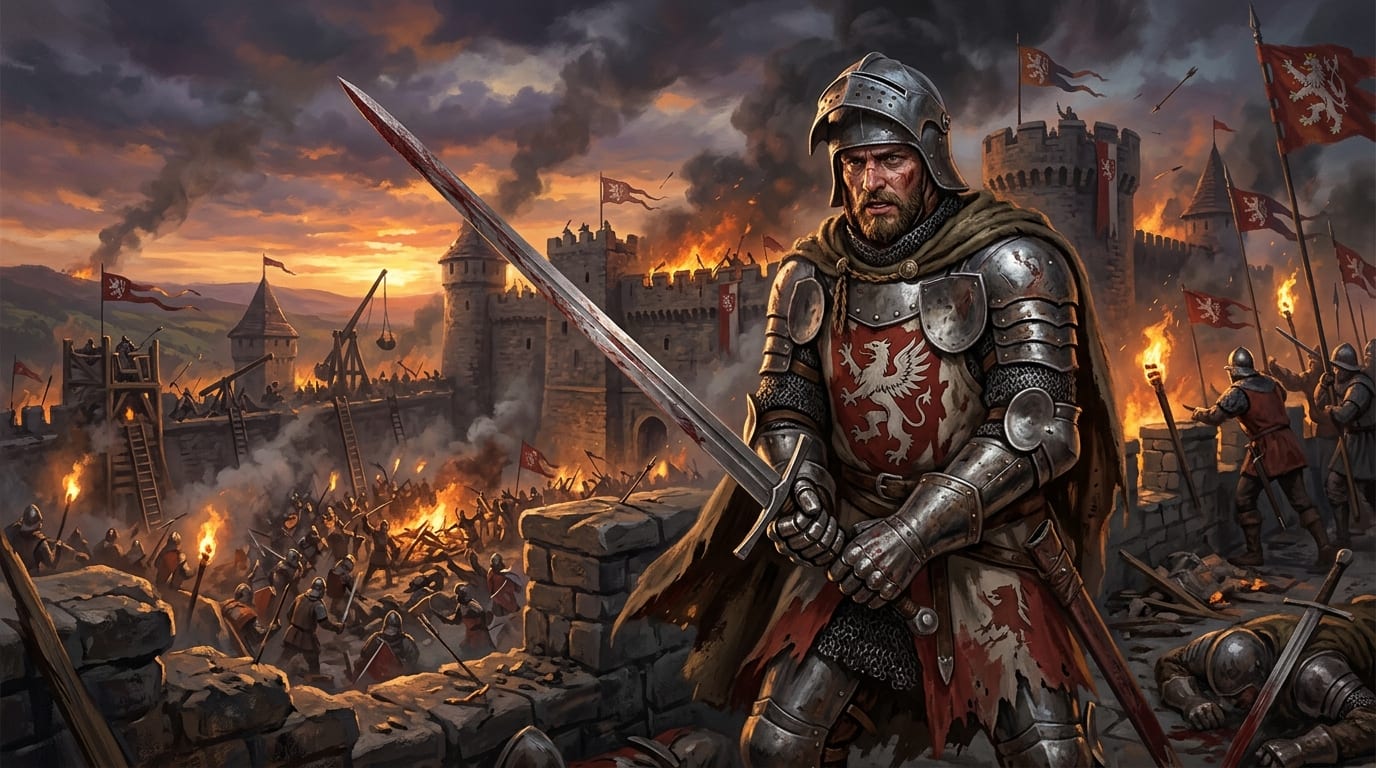
When Warhorse Studios released the original Kingdom Come: Deliverance in 2018, it represented an audacious middle finger to the homogenized tropes of mainstream fantasy RPGs. There were no dragons, no magic spells, no chosen-one prophecies, and no enchanted glowing swords. Instead, players were thrust into 15th-century Bohemia as Henry—an illiterate blacksmith's son who could barely lift a broadsword without collapsing from exhaustion.
In Kingdom Come: Deliverance II, Warhorse Studios delivers on the full scale of its founding vision. Backed by expanded resources and an engine team that has spent six years mastering CryEngine multi-threading, the sequel transports players to the bustling silver-mining metropolis of Kuttenberg and the dramatic sandstone towers of the Bohemian Paradise.
Read our scored Kingdom Come: Deliverance II Technical Review and study our step-by-step Master Strike & Directional Combat Blueprint.
Title: Key Innovations in Kingdom Come: Deliverance II
Badge: Technical Breakdown
- Directional Combat Refinement: Five-point attack rose streamlined to four distinct strike angles, accelerating response times while preserving historical martial authenticity.
- Urban Density & Multi-Threaded AI: Kuttenberg features hundreds of simulated citizens adhering to strict diurnal routines, employment cycles, and dynamic crime observation.
- Blacksmithing & Ranged Arsenal: Authentic minigame crafting paired with devastating early gunpowder handgonnes and historical crossbows with genuine bolt-drop physics.
1. The Art of Historical Martial Arts (HEMA)
Most video game combat is power fantasy choreography: press X to execute a 720-degree spin attack while striking five enemies simultaneously. In Kingdom Come II, attempting such theatrics will immediately result in a halberd thrust to your throat.
Warhorse consulted master European martial artists to calibrate motion data for every guard, riposte, and feint:
- Four-Zone Stance Transitions: Attacks flow naturally from high vertical cuts, left and right horizontal slashes, and center thrusts. Changing guards takes physical frame time, making stance deception a psychological duel.
- Stamina as Armor Poise: Stamina acts as your primary buffer against blunt force trauma. When your stamina pool is depleted, incoming blows penetrate mail and plate directly into Henry’s flesh and bone.
- Armor Layering Mathematics: You do not equip a generic "+5 defense chestplate." Henry wears padded gambesons beneath riveted chainmail hauberks, capped with forged steel cuirasses. A slashing sword that slides harmlessly off plate can still concuss Henry through blunt blunt-force trauma from maces.
2. CryEngine Scaling: The Kuttenberg CPU Stress Test
The original game was infamous for crippling modern CPUs in densely populated towns like Rattay. In Kingdom Come II, Warhorse has thoroughly overhauled CryEngine’s job scheduler:
- Entity & AI Threading: Kuttenberg’s guards, merchants, bathhouse attendants, and beggars operate on asynchronous worker threads, evenly distributing workloads across 16 and 24-thread modern processors.
- Vegetation Distance Fields: Sandstone gorges and thick Bohemian oak forests utilize custom hierarchical level of detail (HLOD), eliminating the aggressive tree pop-in of its predecessor.
- Volumetric Fog & Torchlight Global Illumination: Nighttime patrols through cobblestone alleyways feature bounce lighting from torches and lanterns that illuminate realistic smoke and mist particles.
Check how your CPU and GPU pairing will handle Bohemia's dense forests with our Real-World FPS Calculator and review publisher specifications in our PC Game Requirements Checker.
3. The Verdict: The Gold Standard of Historical Roleplaying
Kingdom Come: Deliverance II stands as a monument to what can be achieved when a development studio commits unequivocally to historical fidelity. It treats the medieval world not as a backdrop for high-fantasy escapism, but as a living, breathing historical reality defined by feudal hierarchy, religious tension, and the tactile struggle for survival.
View full dossier specifications in our Game Directory and share your tactical swordplay tips on the Game Vault Community Forum.