
By Elena Rostova, Narrative & Indie Game Specialist at Game Vault Forum. Published September 2, 2026.
When Sucker Punch Productions revealed Ghost of Yōtei, the studio executed a creative pivot that caught the gaming world by surprise: rather than delivering a direct sequel following Jin Sakai's remaining years on the mainland after Ghost of Tsushima, the developers leaped forward over 300 years into the future to the year 1603.
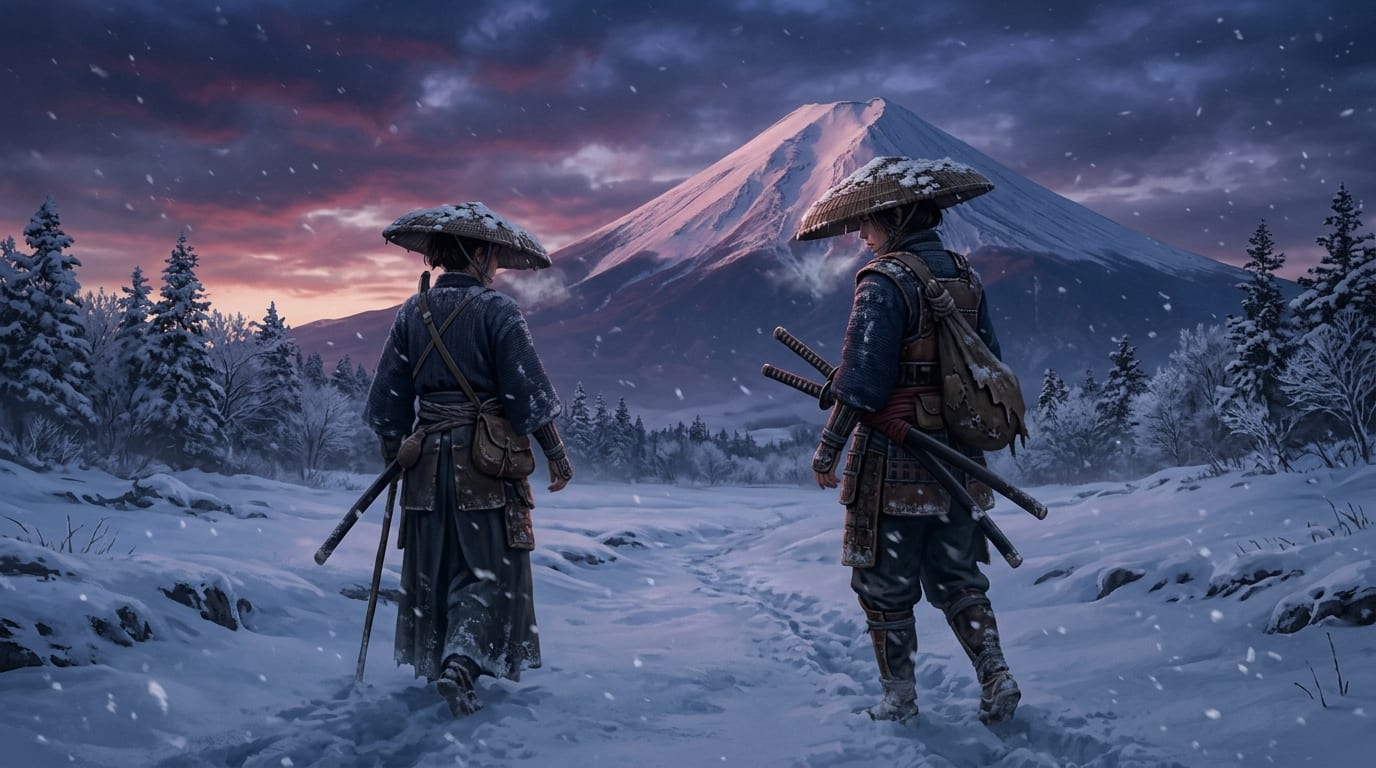
Transporting players to the northern frontier of Ezo (modern-day Hokkaido) surrounding the majestic, solitary volcano of Mount Yōtei, this new chapter stars a new protagonist: Atsu.
Here is our in-depth historical, mechanical, and narrative breakdown of what this bold evolution means for the Ghost franchise.
---
1. The Setting: The Lawless Northern Frontier of 1603 Ezo
The shift from 1274 Tsushima Island to 1603 Mount Yōtei is not merely a change in geography; it is a seismic cultural transformation:
* Beyond the Reach of Samurai Clans: While Tsushima was defined by rigid samurai social hierarchies, honor codes, and feudal clans under the Kamakura Shogunate, early 17th-century Ezo existed outside Japan’s centralized rule. It was a wild, untamed frontier populated by indigenous Ainu communities, ronin outlaws, and opportunistic traders.
* Biomes and Environmental Scale: Mount Yōtei dominates the horizon like an omnipresent northern sentinel. The environmental variety shifts from Tsushima's golden pampas grass and scarlet maples to windswept snow-dusted tundra, alpine volcanic caldera lakes, hot spring geothermal vents, and dense pine forests.
---
2. Combat Evolution: Dual Katanas, Kusarigama, and Early Firearms
In Ghost of Tsushima, Jin Sakai's combat was rooted in the single katana, switching between four stance forms (Stone, Water, Wind, Moon) to break specific enemy defenses.
Atsu's arsenal expands into dynamic asymmetrical combat:
* Dual-Wielding Katana Mastery: Teaser footage and developer disclosures showcase Atsu wielding twin katanas, enabling rapid multi-directional parries, sweeping area-denial strikes against surrounded skirmishes, and devastating cross-slice executions.
Matchlock Firearms & Powder Weapons: In 1603, firearms (tanegashima*) had revolutionized Japanese warfare following the Sengoku period. Introducing flintlock and matchlock pistols and muskets into combat creates high-risk ranged options, adding smoke-obscured tactical versatility.
* The Kusarigama (Chain-Sickle): A classic weapon of ronin and shinobi, enabling distance sweeps, entangling enemy spears, and pulling adversaries into close-quarters finishing range.
---
3. Visual Ambition on PS5 & PS5 Pro
Sucker Punch set a visual benchmark with Tsushima’s artistic use of saturated color, volumetric particle winds (guiding wind navigation), and cinematic Kurosawa-inspired composition.
With Ghost of Yōtei developed exclusively for PlayStation 5 and PlayStation 5 Pro:
* Procedural Wind & Foliage Systems: Every blade of grass and branch reacts to dynamic weather fronts sweeping across the mountain plateau.
* Realistic Snow Deformation & Thermal Shaders: Footprints, wolf tracks, and weapon drag leave physical trails in snow drifts that slowly fill during blizzards.
* Aurora Borealis & Atmospheric Scattering: Night skies in northern Hokkaido feature dynamic northern lights illuminating tranquil campsites, creating a hauntingly beautiful, meditative companion to intense, cinematic swordplay.
Ghost of Yōtei represents Sucker Punch at their most daring: taking the poetic soul of Tsushima and re-forging it into a raw, unpredictable frontier legend.