
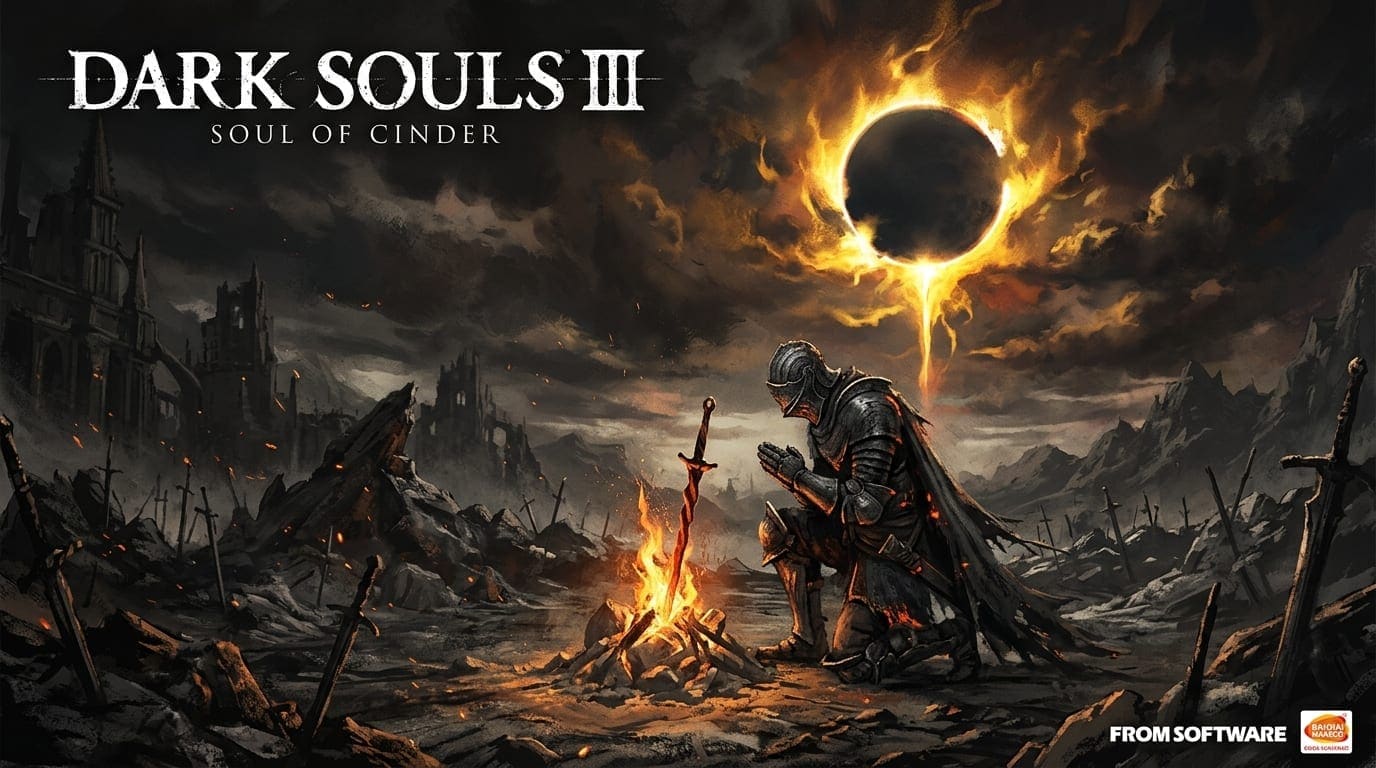
By Elena Rostova, Narrative & Indie Game Specialist at Game Vault Forum. Published September 12, 2026.
In an era where mainstream AAA game development increasingly converged toward cinematic hand-holding—filling player HUDs with intrusive objective waypoints, yellow paint on climbable ledges, and companion characters who vocalize puzzle solutions after five seconds of silence—one genre did the exact opposite.
The Soulslike—birthed by Hidetaka Miyazaki and FromSoftware with Demon’s Souls in 2009 and crystallized into global phenomenon with Elden Ring—built an empire on friction, vulnerability, and silence.
Why does a genre renowned for punishing cruelty, obscure lore, and high failure rates command the most passionate, loyal audience in modern interactive entertainment? The answer lies not in sadistic difficulty for its own sake, but in the psychological architecture of authentic achievement.
---
1. The Anatomy of Friction: The Corpse Run and Meaningful Stakes
Most modern video games treat player death as a minor temporal inconvenience: you die, the screen fades to black, and you instantly respawn three paces away at an automated checkpoint with full inventory intact. Death carries zero consequences, and therefore, survival delivers zero emotional adrenaline.
The Soulslike introduces the Corpse Run:
1. When you perish, your accumulated currency and progression experience (Souls, Blood Echoes, Runes) drop at the exact point of death.
2. You respawn at the last resting checkpoint, and all non-boss enemies in the environment resurrect.
3. You are granted exactly one opportunity to fight your way back and reclaim your life’s work. Die a second time before reaching that bloodstain, and your wealth dissolves forever.
This single mechanical pillar fundamentally alters player psychology:
* Every corner turned in an unfamiliar subterranean ruin becomes an exercise in heart-pounding risk assessment.
* Do you push deeper into the darkness hoping for a checkpoint bonfire, or do you retreat back through dangerous halls to level up and bank your progress safely?
* Triumph cannot exist without genuine stakes. When you finally strike the killing blow on a boss after two dozen attempts with zero healing flasks remaining and a sliver of health, the flood of dopamine is visceral because the game gave you no guarantees.
---
2. Combat as a Conversation: Stamina Discipline and Attack Commitment
Many action games allow players to cancel animations instantly mid-swing into an invincible block or dodge roll. Combat is essentially reaction-time button mashing.
Soulslike combat is fundamentally an agreement of commitment:
* Animation Priority: Once you press the heavy attack trigger with an Ultra Greatsword, your character commits to the full physical kinetic swing. If you mistimed the boss's counter-attack, you cannot cancel out; you will absorb the punishment.
* The Stamina Meter: Stamina represents cognitive presence. Every roll, block, and swing consumes energy. Overextending on offense leaves you guard-broken and helpless. Combat becomes a rhythmic conversation: observe the adversary's telegraphs, evade into their blind spot, execute a measured counter-strike, and recover posture.
---
3. Environmental Archaeology: Narrative Without Exposition Dumps
Unlike games that pause gameplay every seven minutes to deliver thirty minutes of pre-rendered motion-captured cutscenes, Soulslikes treat the player as an archaeologist:
* The story of Lordran, Yharnam, or the Lands Between is etched directly into the architecture: the crumbled colossal aqueducts, the petrified giants, the placement of an armored corpse holding a ring in an abandoned drainage tunnel.
* Item Descriptions as Fragments: Reading the flavor text on a rusty key or an ancient incantation provides cryptic puzzle pieces that players piece together collaboratively on community forums.
The genius of this approach is respect: the game trusts the player's intelligence to explore, deduce, and interpret meaning rather than spoon-feeding passive entertainment.
---
4. The Democratic Masterpiece: Elden Ring’s Open-World Renaissance
When FromSoftware transitioned this formula into an open world with Elden Ring, skeptics wondered whether non-linear design would dilute the tension.
Instead, it solved the genre's historic choke point:
In linear Soulslikes, getting stuck on a brutal roadblock boss (like the Bell Gargoyles or Father Gascoigne) meant hitting a wall. In Elden Ring, if Margit the Fell Omen batters you into the dirt at Stormveil Castle, you simply turn around: explore the Weeping Peninsula, discover hidden subterranean catacombs, acquire powerful spirit ashes, level up, and return as a hardened conqueror.
The Soulslike is not a passing trend. It is a triumphant reminder that players do not seek passive digital amusement—they crave worlds that challenge their resolve, respect their intelligence, and reward their perseverance.